
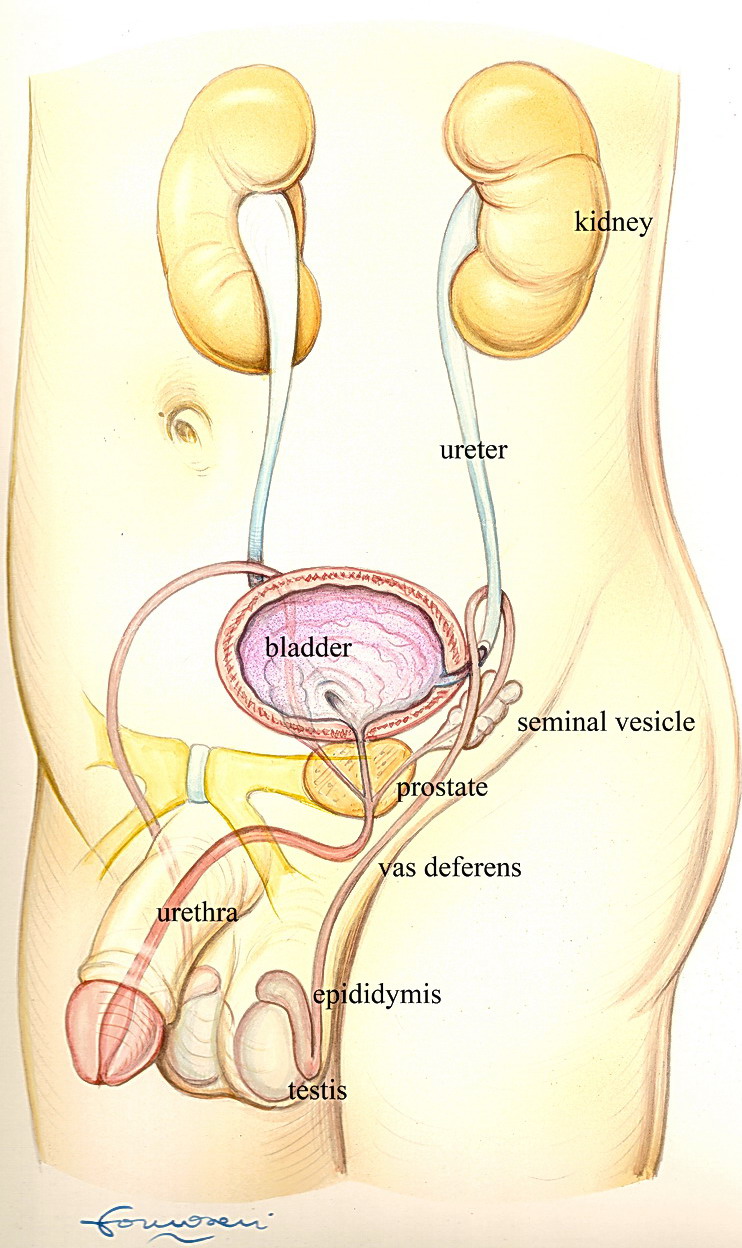
Prostatitis
Prostatitis is an inflammation of prostate gland. The main
physiologic role of the prostate is the secretion of part of
the seminal fluid. The gland contains mainly thousand of
small acinar glands, which produced a part of the semen,
mixed to muscular ad fibrous tissue.
Prostatitis is quite common and may affect 2%-16% of male
population.
The main cause of prostatitis is a germ, often coming from
the vaginal mucosa, reaching the prostate through the
urethra, during an intercourse. However is not rare to have
prostatitis symptoms without any detectable infective agent.
Gland inflammation can be acute or chronic. Acute prostatitis
may cause a strong pain involving the perineum (the area
between scrotum and anus), often the suprapubic area, at
times irradiating toward the scrotum. Related urinary
symptoms with burning feeling during micturition and urinary
frequency are not uncommon. At times there can be fever.
In chronic prostatitis the symptoms are less severe, faint,
not seldom recurrent, and they can involve the perineum, the
suprapubic region, sometimes the inguinal/scrotal region.
Most recent classifications include acute prostatitis,
chronic bacterial prostatitis, chronic abacterial
prostatitis/chronic pelvic pain (probably nearly 90% of all
kind of prostatitis), where the agent of inflammation is not
identified or clear , and asymptomatic inflammatory
prostatitis (an occasional finding with no symptoms).
Lack of exercise, stress and prolonged sexual abstinence may
increase the risk of prostatitis.
Sometimes intercourse may prolong genitourinary infection for
bacterial swap between partners. In such a case, it would be
better to use a condom for 3-4 months, until the infection
has been healed.
Acute prostatitis, and to a lesser degree chronic
prostatitis, can be successfully treated with antibiotic
therapy, especially if targeted. The infective agent of
prostatitis can be found with a culture of urine, urethral
secretion, prostatic secretion, or semen. Then the most
proper antibiotic can be chosen. Not all antibiotics can
penetrate effectively the prostate. Sometimes chronic
prostatitis therapy can difficult for a tendency to symptoms
recurrence, despite of prolonged antibiotic therapy.
Chronic prostatitis can be a tedious disease, though not
dangerous for patient´s health.
Despite the fact that recently some Authors have suggested a
possible role of chronic inflammation in the onset of
prostate cancer, this correlation remains to be proven.